Recovering the sensor version and tank reference distances for Endress Hauser FMU30-1020/0 before replacing an installed Prosonic measurement point
Endress Hauser FMU30-1020/0 is retained as the exact listed reference for a Prosonic FMU30 request. FMU30 is a compact ultrasonic transmitter family for non-contact measurement of liquids, pastes and coarse bulk materials. The short 1020/0 suffix does not establish the complete configured order code, so sensor size, connection, range and approval details need the original device record.
Draw the empty and full conditions
For Endress Hauser FMU30-1020/0, start with the distance from the sensor face to the empty reference and the highest intended level. Include the mounting nozzle and nearby internal structures. The selected sensor’s blocking distance must be respected. A tank-capacity figure alone cannot establish whether the acoustic geometry is suitable, so keep a dimensioned sketch with the technical inquiry.
Describe what the sound travels through
The application review for Endress Hauser FMU30-1020/0 should cover foam, turbulence, vapor conditions and filling behavior where relevant. These observations help the instrument engineer assess the measurement path. They are not reasons to invent a universal range value for the abbreviated code. Keep the actual process conditions separate from the FMU30 family capability in the quotation record.
Preserve the echo-related configuration
Before removing Endress Hauser FMU30-1020/0, recover the saved settings and the available record of the established measurement behavior. Note changes to the vessel or filling arrangement since commissioning. A replacement instrument can require a site-specific setup even when its family identity matches. The plant should define the approved method for confirming that the level reading remains representative across the operating span.
Ultrasonic application and configuration record
| Selection item | Verified information or configuration check |
|---|---|
| Requested reference | Endress Hauser FMU30-1020/0 |
| Family principle | Ultrasonic time-of-flight level measurement |
| Process context | Liquids, pastes or coarse bulk materials, subject to suitability review |
| Sensor version | Confirm the actual FMU30 sensor and process connection |
| Measurement span | Determine from the selected sensor and vessel geometry |
| Near-zone allowance | Check the documented blocking distance |
| Signal setup | Retain output scaling and empty/full reference settings |
Distinguish distance from the displayed process value
For Endress Hauser FMU30-1020/0, record whether the receiving system uses the signal as level, volume or another calculated value. Keep the empty and full references and the controller scaling consistent. If the vessel shape requires a conversion, preserve that configuration record too. This helps avoid a situation in which the transmitter reading appears reasonable but the control system interprets it using a different span.

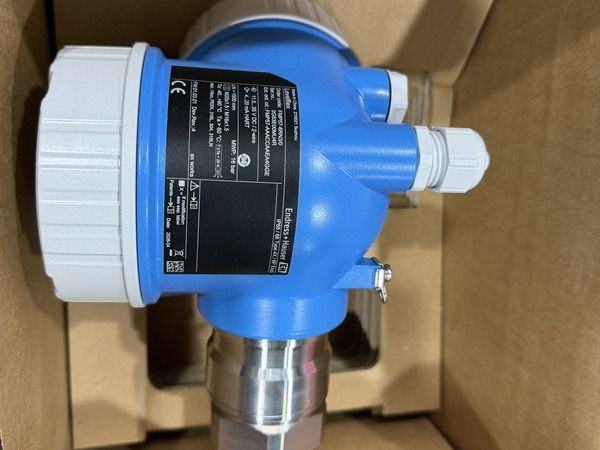
Shared reference image associated with Endress Hauser FMU30-1020/0; it does not establish the exact delivered model, options or accessories.
Resolve the short code with label evidence
- The purchase request for Endress Hauser FMU30-1020/0 should include a readable nameplate or original order confirmation.
- Related FMU30 sensor versions and other Prosonic transmitters remain separate comparison options.
- Ask for the exact process connection and approval selection before accepting an offer.
- Do not use a shared product image to infer the dimensions or environmental limits of the delivered configuration.
Acceptance follows the vessel record
Receiving inspection for Endress Hauser FMU30-1020/0 should compare the label and mechanical details with the approved device record. Pass the confirmed identity and settings package to the commissioning team. Their restoration checks for Endress Hauser FMU30-1020/0 should reference known vessel conditions under the site procedure. That creates a useful history for later maintenance without presenting an abbreviated purchasing suffix as a complete technical specification.