
Avoiding Common DN40 Flow Measurement Errors with the ABB FEW31-1.040.A.1.S.0.S2.B.1.A.1.A.0.A.1.B.0.A.0 WaterMaster
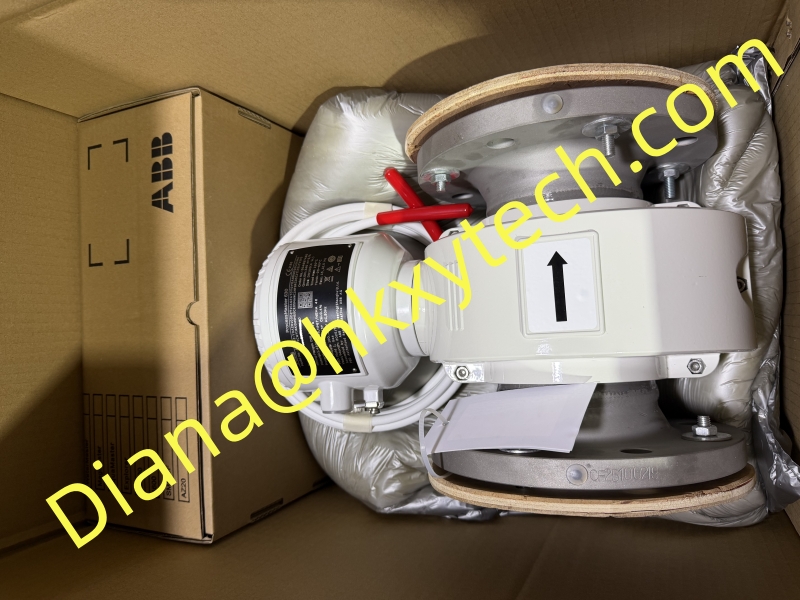
The ABB FEW31-1.040.A.1.S.0.S2.B.1.A.1.A.0.A.1.B.0.A.0 is a DN40 full-bore WaterMaster electromagnetic flowmeter for conductive liquids in compact water-treatment skids, utility branches, wash-water circuits, dosing support systems and process-water lines. Its integral configuration can simplify installation, but small-line measurement is especially sensitive to piping geometry, air pockets, grounding and incorrect low-flow assumptions.
Problem 1: Selecting DN40 Because the Pipe Is DN40
Pipe size is only the first clue. Calculate velocity at minimum, typical and maximum flow. If normal demand produces very low velocity, the ABB FEW31-1.040.A.1.S.0.S2.B.1.A.1.A.0.A.1.B.0.A.0 may require a different installation strategy or a smaller measuring section. If maximum flow is excessive, check pressure loss, pump capacity and noise elsewhere in the system. Use the actual operating envelope, not only a design maximum printed on a drawing.
Problem 2: Measuring a Liquid That Is Not Conductive Enough
WaterMaster uses the electromagnetic principle and therefore requires a conductive liquid. Confirm conductivity for purified water, mixed chemicals and startup flushing media. A configuration that performs well on municipal water may not behave identically on very low-conductivity service. Verify the process against current ABB limits before assigning ABB FEW31-1.040.A.1.S.0.S2.B.1.A.1.A.0.A.1.B.0.A.0 to the duty.
Problem 3: Allowing the Meter Tube to Drain
Compact skids often place instruments near high points, hose connections or open tanks. Install the ABB FEW31-1.040.A.1.S.0.S2.B.1.A.1.A.0.A.1.B.0.A.0 where the bore remains full. Avoid a high horizontal section where air collects and avoid an unrestrained downward discharge. If vertical installation is used, upward flow can help maintain a full pipe and move bubbles through the meter.
Problem 4: Putting a Control Valve Directly Upstream
A throttling valve, pump outlet or multiple elbows can distort the velocity profile. Position disturbances and straight lengths according to ABB guidance. Where skid dimensions are fixed, place the valve downstream when practical and document the reduced straight run. Commission the ABB FEW31-1.040.A.1.S.0.S2.B.1.A.1.A.0.A.1.B.0.A.0 across several flows to expose installation-dependent errors.
Problem 5: Treating Every Wetted Material as Universal
The complete code identifies specific liner, electrode, flange and accessory selections. Confirm those options from the current WaterMaster ordering data. Review compatibility with the process liquid, disinfectant, cleaning chemicals and temperature. The ABB FEW31-1.040.A.1.S.0.S2.B.1.A.1.A.0.A.1.B.0.A.0 should not be approved only because another FEW31 works in a different service.
Problem 6: Poor Flange Alignment on a Small Line
Small piping can be easy to pull into alignment with bolts, but that transfers stress to the meter. Support the pipe, center approved gaskets and prevent gasket intrusion into the bore. Tighten evenly and inspect for leakage after pressure testing. Mechanical strain can affect service life even when the ABB FEW31-1.040.A.1.S.0.S2.B.1.A.1.A.0.A.1.B.0.A.0 initially reads correctly.
Problem 7: Incomplete Potential Equalization
Determine whether the connected pipe is metallic, lined or plastic and follow ABB grounding instructions for the actual installation. Grounding accessories are application-dependent. Do not copy a bonding arrangement from a neighboring meter without checking the ABB FEW31-1.040.A.1.S.0.S2.B.1.A.1.A.0.A.1.B.0.A.0 order code and pipe construction.
Problem 8: Hiding Noise with Excessive Damping
Damping can stabilize a display, but too much delays control response and can conceal bubbles, pump pulsation or grounding noise. Begin with a justified value and compare raw behavior at several operating conditions. For ABB FEW31-1.040.A.1.S.0.S2.B.1.A.1.A.0.A.1.B.0.A.0, align damping with the PLC filter so two layers of filtering do not create an unexpectedly slow loop.
Problem 9: Incorrect Pulse and Totalizer Scaling
Define whether the pulse represents liters, cubic meters or another volume and verify maximum pulse frequency at peak flow. Confirm current-output range, units, flow direction and low-flow cutoff. Test the ABB FEW31-1.040.A.1.S.0.S2.B.1.A.1.A.0.A.1.B.0.A.0 output against the PLC one point at a time before relying on accumulated totals.
Problem 10: Accepting a Displayed Value Without a Test Record
Verify the full ABB FEW31-1.040.A.1.S.0.S2.B.1.A.1.A.0.A.1.B.0.A.0 nameplate and DN40 connection.
Inspect bore direction, supports, flange alignment, grounding and cable entries.
Fill and vent the pipe, then establish a controlled zero-flow condition.
Check current, pulse, totalizer and diagnostic mapping at the control system.
Run low, normal and high operating points and record velocity and stability.
Save final parameters, totalizer baseline and photographs for handover.
Maintenance teams should trend diagnostics and compare them with process events before removing the meter. Bubbles, deposits, empty pipe, valve position and conductivity changes can all alter performance. A good baseline allows the ABB FEW31-1.040.A.1.S.0.S2.B.1.A.1.A.0.A.1.B.0.A.0 to be evaluated with evidence rather than replaced by guesswork.
The compact DN40 size makes the ABB FEW31-1.040.A.1.S.0.S2.B.1.A.1.A.0.A.1.B.0.A.0 useful on utility and skid systems, but compact piping does not remove measurement fundamentals. Full pipe, appropriate velocity, compatible materials, correct grounding and verified output scaling are what allow the ABB FEW31-1.040.A.1.S.0.S2.B.1.A.1.A.0.A.1.B.0.A.0 to deliver dependable WaterMaster flow data.