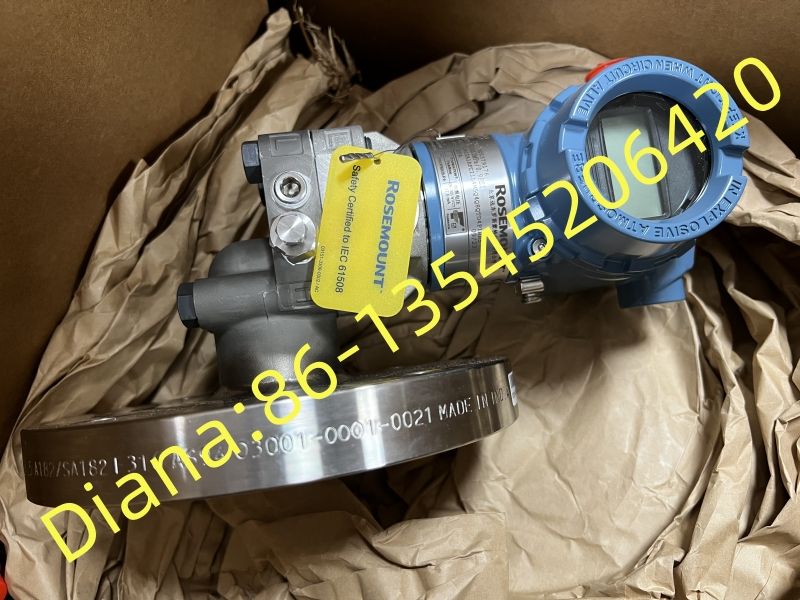

Applying Endress+Hauser 5H5B50-AAIBADAAFAABJAFDAS0AA2+AALPLT Promag H 500 to Hygienic Conductive-Liquid Flow Measurement
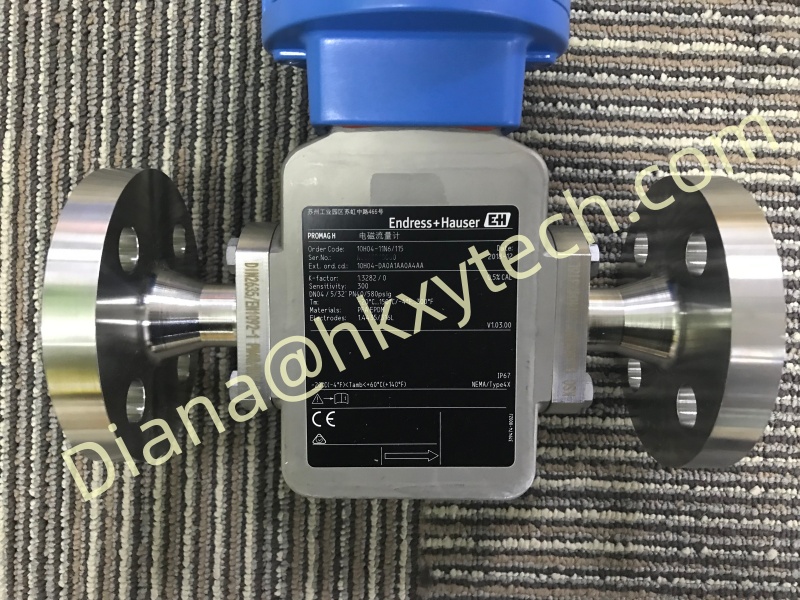
Endress+Hauser 5H5B50-AAIBADAAFAABJAFDAS0AA2+AALPLT is a configured Proline Promag H 500 electromagnetic flowmeter. The Promag H sensor is intended for hygienic processes, while the remote Proline 500 transmitter gives designers flexibility to place the display and electronics where operation and maintenance are convenient.
Why hygienic flow measurement requires more than accuracy
Food, beverage and life-science applications require cleanable wetted surfaces, suitable seals and process connections, and an installation that drains correctly. Product-contact materials must be checked against the medium, cleaning chemicals and sterilization temperature. The full 5H5B50-AAIBADAAFAABJAFDAS0AA2+AALPLT configuration should be compared with the approved piping and instrument specifications.
Electromagnetic measurement has no obstruction in the measuring tube and no moving parts in the flow path. The liquid must provide adequate electrical conductivity, and the measuring tube should remain full. Gas pockets, partial filling or unstable grounding can create errors even when the transmitter is functioning correctly.
| Promag H 500 review point | Project consideration |
|---|---|
| Model | Endress+Hauser 5H5B50-AAIBADAAFAABJAFDAS0AA2+AALPLT |
| Measurement principle | Bidirectional electromagnetic flow measurement for conductive liquids |
| Product architecture | Promag H hygienic sensor with remote Proline 500 transmitter |
| Published family accuracy | Standard ±0.5% of reading ±1 mm/s; optional accuracy depends on the ordered configuration |
| Process review | Conductivity, temperature, pressure, cleaning cycle, connection, liner, electrode and seal compatibility |
Install the sensor for a full and stable measuring tube
Choose an orientation that keeps both electrodes covered and allows air to leave the line. Avoid mounting at the highest point of a pipe or immediately upstream of an open discharge. Provide suitable straight runs where the piping arrangement creates severe swirl, and support the pipe so mechanical stress is not transferred through the sensor connection.
The remote cable route should be protected from power cables, moisture and mechanical damage. Confirm equipotential bonding and grounding according to the liner, pipe material and manufacturer instructions. Hygienic fittings must be assembled with the correct gasket and torque so cleanability is maintained.
Commission with process evidence and diagnostic records
Verify flow direction, engineering units, pulse or analog scaling, totalizer behavior and empty-pipe response. Compare the displayed flow with a trusted process reference under stable conditions. Record the zero-check conditions rather than performing an adjustment while the pipe is not completely full and stationary.
Heartbeat Technology and Proline diagnostics can support verification and maintenance, but results should be retained with process conditions and configuration data. Keep the complete model, serial numbers for sensor and transmitter, cable information and parameter backup together for future service.