
Advanced ABB PDS300.N.S9.A.1.A.A.2.A.H-.D1.HAA.BC.CF Differential Pressure Transmitter for Precise Flow, Level and Process Pressure Measurement
 November
03, 2026
Engineering the ABB PDS300.N.S9.A.1.A.A.2.A.H-.D1.HAA.BC.CF Differential Pressure Transmitter into Accurate Flow, Level and Pressure Applications
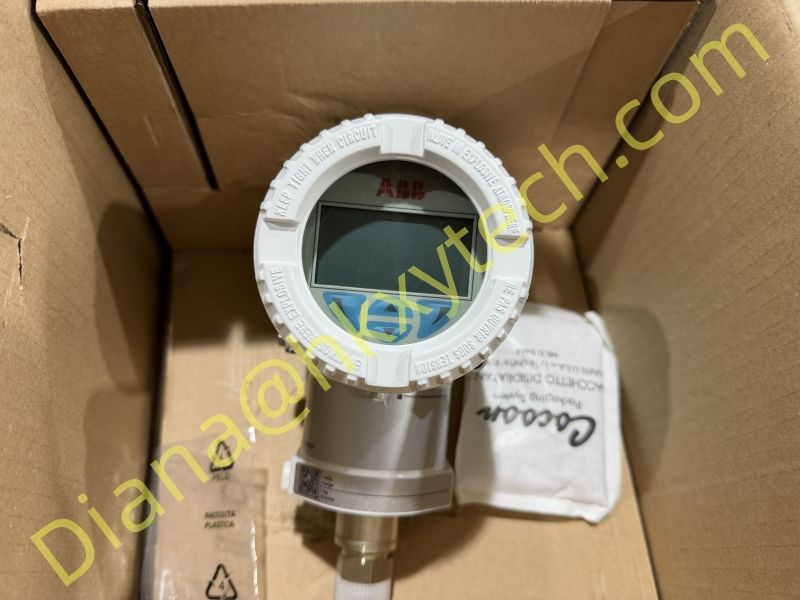
The ABB PDS300.N.S9.A.1.A.A.2.A.H-.D1.HAA.BC.CF is a configured PDS300 differential pressure transmitter intended for industrial process measurement. ABB describes the PDS300 family as an all-rounder for liquid, gas and steam differential-pressure duties and for liquid-level measurement in open or closed tanks. Because every section of the ABB PDS300.N.S9.A.1.A.A.2.A.H-.D1.HAA.BC.CF ordering code carries configuration information, the complete suffix must remain attached to quotations, drawings and calibration records.
A measurement result begins with the primary element
In flow service, the ABB PDS300.N.S9.A.1.A.A.2.A.H-.D1.HAA.BC.CF measures the pressure difference created by an orifice plate, flow nozzle, Venturi or another primary element. The transmitter does not determine the final flow range by itself: bore data, line size, fluid density, operating pressure, temperature and square-root extraction must agree with the calculation sheet. For level service, the engineering record must identify whether the tank is open, closed, pressurized or fitted with remote seals.
ABB publishes a base accuracy of ±0.055% of calibrated span for the PDS300 family. The achieved loop performance also depends on range selection, installation and calibration.
Published family span limits extend from 0.2 to 60,000 kPa. This does not identify the calibrated span of ABB PDS300.N.S9.A.1.A.A.2.A.H-.D1.HAA.BC.CF; the nameplate and project datasheet remain controlling.
The PDS300 family supports 4–20 mA with HART options. Confirm the exact output, supply and host-system files selected for ABB PDS300.N.S9.A.1.A.A.2.A.H-.D1.HAA.BC.CF.
Impulse piping can dominate differential-pressure performance
The high- and low-pressure impulse lines should be kept as short, balanced and temperature-consistent as practical. Liquid applications require provisions for trapped gas; gas applications require provisions for condensate; steam applications normally use condensate pots or suitable wet-leg arrangements. Before ABB PDS300.N.S9.A.1.A.A.2.A.H-.D1.HAA.BC.CF is connected, the lines should be flushed under the approved site procedure and the manifold ports checked for leakage and correct orientation.
Mounting position affects zero. After the ABB PDS300.N.S9.A.1.A.A.2.A.H-.D1.HAA.BC.CF is installed and the process connections are stable, perform the permitted position correction or zero trim according to ABB instructions. A zero trim must not be used to hide an incorrect range, blocked impulse line or unequal wet leg. The as-left record should include applied pressure points, allowable error, observed output and final configuration.
Order-code and material review before purchase
Compare ABB PDS300.N.S9.A.1.A.A.2.A.H-.D1.HAA.BC.CF with the existing nameplate, not with a shortened PDS300 description. Verify sensor range, process connection, wetted materials, fill fluid where applicable, enclosure, display, communication, manifold or mounting hardware and hazardous-area approvals. The family offers multiple configurations, and a physically similar transmitter may not be suitable for the same pressure boundary or process medium.
Commissioning record for a maintainable installation
Commission the ABB PDS300.N.S9.A.1.A.A.2.A.H-.D1.HAA.BC.CF from sensor to control-room display. Confirm the lower and upper range values, engineering units, transfer function, damping, alarm direction, tag and device address. Apply several traceable differential-pressure points and compare the transmitter output with the control-system indication. For flow measurement, verify square-root handling is performed in one intended location rather than being duplicated in both the ABB PDS300.N.S9.A.1.A.A.2.A.H-.D1.HAA.BC.CF and the control system.
For an ABB PDS300.N.S9.A.1.A.A.2.A.H-.D1.HAA.BC.CF quotation, send the complete code, calibrated range, maximum working pressure, process medium, temperature, connection, wetted-material requirement, output protocol and certification needs. Exact configuration evidence reduces replacement risk and supports a cleaner commissioning handover.