
MTL4842 discontinued HART Interface Module Lifecycle Guide for MTL4840 System Spares, Compatibility Checks and Migration Planning
 September
07, 2026
September
07, 2026
How to handle MTL4842 discontinued status in an installed MTL4840 HART maintenance network without losing loop history or system compatibility
A search for MTL4842 discontinued usually begins after a maintenance team finds an older HART multiplexer installation that still performs useful loop diagnostics but no longer has a simple, current-stock replacement path. The immediate question is rarely just price. The real task is to decide whether the site should preserve the installed architecture, secure a verified spare, repair a failed assembly, or migrate the HART maintenance function into a supported platform.
The manufacturer literature identifies the MTL4842 as the HART interface module used within the legacy MTL4840 system. It receives control signals from an MTL4841 communications module, addresses connected loops through a backplane and selects the required channel for HART communication. That role means an MTL4842 cannot be evaluated as an isolated plug-in card: the MTL4841, backplane, host connection, loop arrangement and system software all influence the replacement decision.
For procurement teams, MTL4842 discontinued is therefore a lifecycle and compatibility inquiry. A useful quotation request must establish what is installed and what outcome the plant expects. For engineering teams, it is also a records problem: undocumented addresses, missing backplane references and an unknown host configuration can turn a small spare-parts order into a lengthy shutdown investigation.
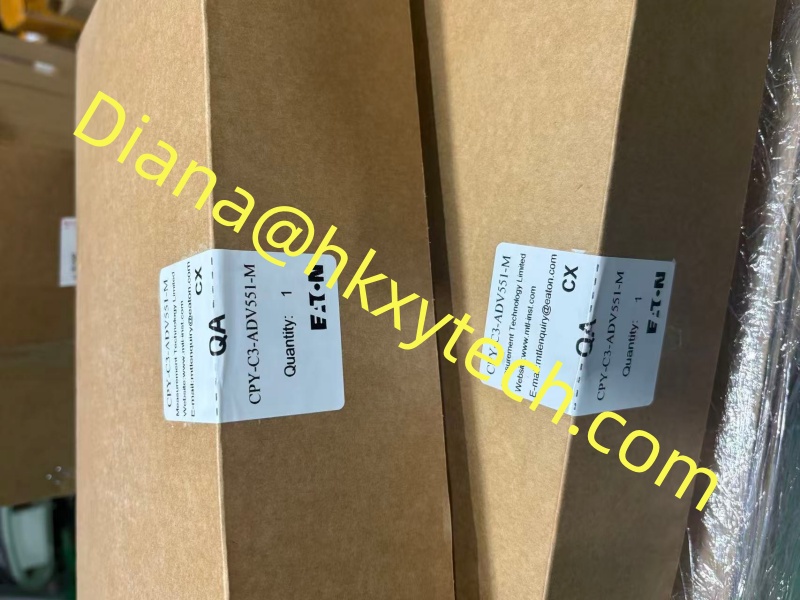
Reference image for MTL4842 discontinued. Use the delivered nameplate, module address, backplane details and system documentation as the final identification evidence.
Start with the lifecycle evidence, not a visual match
The official MTL documentation index marks several legacy MTL4842 records as obsolete or terminated, including an obsolete FM entry and terminated European declaration records. The same index also shows that document status can differ by market or certificate record. Consequently, MTL4842 discontinued should not be used as a shortcut for saying that every historical approval is identical or that every installed module must be removed immediately.
A buyer should separate three questions. First, is new manufacture or normal factory supply available for the exact module? Second, is the installed equipment still acceptable under the plant's maintenance policy and local approval basis? Third, which current hardware or architecture can take over the required HART maintenance function? Those questions need different evidence and may have different answers.
Before issuing an order, record the complete nameplate, revision markings and certificate references from the installed assembly. Compare them with the current manufacturer index and obtain written confirmation for the destination project. This avoids treating the phrase MTL4842 discontinued as a universal technical conclusion when it is first a product-lifecycle signal that calls for project-specific review.
What the legacy MTL4842 contributed to the HART network
In the documented MTL4840 architecture, one MTL4841 communications module can control as many as sixteen MTL4842 modules through the interface bus. Each MTL4842 connects to loop circuits through the appropriate backplane and responds to its selected unit address. The module then routes the chosen channel for HART communication, allowing host maintenance software to reach field instruments while their 4-20 mA process signals remain part of the control system.
- Function: legacy HART interface module for the MTL4840 HART maintenance system.
- System relationship: controlled by an MTL4841 communications module over the interface bus.
- Capacity context: up to sixteen MTL4842 modules may be associated with one MTL4841 in the documented arrangement.
- Loop access: a module works with its backplane connections to select the requested channel for HART communication.
- Addressing: the unit address is switch selectable and must agree with the host configuration and physical installation.
- Interface bus limit: manufacturer literature gives a maximum total bus length of 4 m from module 1 through module 16.
- Indication: published information describes green power, amber selected and red loop-address LED functions.
- Power context: powered from the backplane, with published consumption below 0.1 W for the module.
These values explain why a spare must be matched to more than its front label. With MTL4842 discontinued equipment, a correct-looking module may still fail to restore communication if the address, backplane wiring, interface-bus continuity or MTL4841 configuration is wrong. Technical acceptance should therefore include an installed-system test, not just a bench power check.
Four realistic paths for an installed site
The following decision view helps maintenance, procurement and automation teams discuss the same outcome. It does not nominate a universal successor. Any replacement or migration selection must be confirmed against the current Eaton MTL documentation and the site's approved control-system design.
| Installed situation | Practical route | Evidence needed before approval |
| System healthy; spare risk only | Build a controlled spare and documentation plan | Installed module labels, MTL4841 details, backplane part references, addresses, host software and a tested recovery procedure. |
| One module failed; architecture retained | Source and qualify an exact compatible spare | Condition, provenance, revision, storage history, functional test, return terms and an on-site communication test with the existing rack. |
| Intermittent communication or unknown fault | Diagnose the complete bus before replacing hardware | Power quality, interface-bus length and continuity, connectors, addresses, MTL4841 status, backplane condition and host diagnostics. |
| Multiple failures or long-term obsolescence exposure | Create a staged migration package | Loop inventory, HART use cases, control-system interfaces, hazardous-area basis, shutdown window, test plan and rollback criteria. |
The evidence package that makes a discontinued-module inquiry answerable
A request that says only MTL4842 discontinued leaves too many unknowns. Suppliers may be able to locate legacy stock, refurbished equipment or repair services, but condition and compatibility cannot be inferred from a marketplace description. A structured evidence package makes it possible to distinguish an exact spare from an item that merely shares the MTL4842 family name.
- Clear photographs of the MTL4842 front, side labels, revision marks, connectors and the installed backplane position.
- MTL4841 model and revision, host connection method, maintenance software name and the operating-system environment if it is still relevant.
- Module address, rack position, number of populated HART loops and the relationship between physical channels and plant instrument tags.
- Backplane part number, associated intrinsic-safety interface or safe-area connection unit, and any cabinet drawing that shows the loop routing.
- Fault symptoms, LED observations, diagnostic messages, work already attempted and whether the problem follows the module or remains with one slot.
- Destination country, hazardous-area classification, certificate requirements, quantity, delivery deadline and whether the need is repair, replacement or migration.
- Required inspection evidence, test report, warranty terms, packing standard and written approval for used or refurbished material when applicable.
This evidence also reduces counterfeit and condition risk. When MTL4842 discontinued stock is offered, the buyer should ask how the item was stored, whether seals or connectors are damaged, whether repair work was performed and what functional testing was completed. Photographs should be tied to the actual item or lot, not only to a generic catalogue image.
A fault can sit outside the MTL4842
An obsolete module is an easy suspect, but HART communication depends on the complete signal path. A site should inspect backplane power, connector condition, module addressing, the interface cable, bus length, termination, the MTL4841 communication link and the host configuration. If only one field device is unavailable, its loop impedance, HART compatibility and wiring deserve attention before the common interface module is condemned.
The published 4 m interface-bus limit is especially relevant after cabinet changes. Additional cable, rerouting or temporary extensions can create a fault that appears to be module related. Duplicate or incorrect addresses can produce a similar result. A controlled diagnostic record helps prevent replacement of a serviceable MTL4842 while the actual issue remains in the rack or software configuration.
For this reason, MTL4842 discontinued troubleshooting should preserve the original symptom and test one change at a time. Record LED states, communication results and module position before moving hardware. If a known-good spare is used, document its revision and return the rack to the original state if the test does not resolve the problem.
Migration should preserve the maintenance outcome, not just the old connector pattern
The MTL4840 system was intended to give maintenance software access to HART information from field instruments. A migration project should begin by listing how the plant actually uses that information. Some sites only read identification and diagnostics; others upload configurations, manage calibration records or depend on scheduled condition checks. Replacing hardware without protecting those workflows can leave the control loops running while quietly removing valuable maintenance capability.
- Inventory every connected loop and identify which HART variables, diagnostics and maintenance actions are used today.
- Capture the MTL4841 and MTL4842 addressing scheme, backplane arrangement, host mapping and any cabinet or intrinsic-safety interfaces that must remain during transition.
- Define the future architecture in functional terms: loop access, asset-management integration, cybersecurity boundary, hazardous-area approval, redundancy and service support.
- Select a pilot group of non-critical loops and prove communication, device identification, diagnostics and configuration handling with the proposed platform.
- Plan the shutdown sequence, temporary coexistence if required, rollback criteria, commissioning records and training for maintenance personnel.
- Retain validated spares and configuration backups until the migrated loops have passed the agreed operating period and all records are complete.
This staged approach turns MTL4842 discontinued risk into a controlled engineering project. It also allows buyers to compare the cost of scarce legacy stock with the cost and long-term support value of migration, rather than making the decision from unit price alone.
How to write the purchase or service request
Keep MTL4842 discontinued in the subject line when the inquiry is specifically about lifecycle status, legacy availability or migration support. In the body, state whether the required outcome is an exact spare, tested refurbished module, repair assessment, diagnostic support or a replacement architecture. Include the evidence package and define what the supplier must confirm in writing.
For an exact-spare request, ask for the visible model and revision, condition, quantity, test scope, warranty, lead time and photographs of the offered unit. For a migration request, include loop count, existing MTL4841 and backplane data, host system, hazardous-area requirements and the required commissioning window. Avoid approving a substitute solely because its description contains HART interface module.
Search phrases such as MTL4842 replacement, MTL4840 HART multiplexer spare, legacy MTL HART interface module, MTL4841 and MTL4842 compatibility, or obsolete HART maintenance system migration may help buyers find relevant support. The controlled identifier remains MTL4842, while the phrase MTL4842 discontinued describes the purchasing and lifecycle context of this page.
A concise acceptance boundary for buyers and engineers
HKXY Tech presents this MTL4842 discontinued page as a sourcing and lifecycle reference for legacy industrial installations. Availability, originality, condition, certificate suitability and compatibility must be confirmed for the actual item and destination project. No universal drop-in successor is claimed here because the correct path depends on the installed MTL4841, backplane, HART loops, host software and approval basis.
The safest next step is to send the complete installed evidence before committing to an order. A verified spare may be appropriate for a stable system with a short-term maintenance need, while a staged migration may be more defensible when several modules, host dependencies or approval records are approaching end of support. In both cases, the goal is continuity of HART maintenance access with traceable engineering decisions.
Manufacturer references reviewed for this page: Eaton MTL MTL4840 product-document index, MTL4840 HART Interface Modules datasheet and INM4840 installation manual. Document and certificate status should be rechecked against the current official index before purchase or design approval.