
Diagnostic-Ready E+H TMT82-AAA2AB1A1AAA1+Z2 Dual-Input HART Temperature Transmitter for Accurate Process Measurement and Sensor Reliability
 August
20, 2026
August
20, 2026
Building a Traceable Temperature Signal Chain with the E+H TMT82-AAA2AB1A1AAA1+Z2: Sensor Strategy, HART Setup and Proof Testing
The E+H TMT82-AAA2AB1A1AAA1+Z2 is a configuration-specific iTEMP TMT82 temperature transmitter for projects that need accurate conversion of industrial temperature sensors into a stable 4-20 mA signal with HART communication. The TMT82 platform supports two universal sensor inputs and advanced diagnostics, allowing one compact transmitter to contribute more than a single process value when the application is engineered and documented correctly.
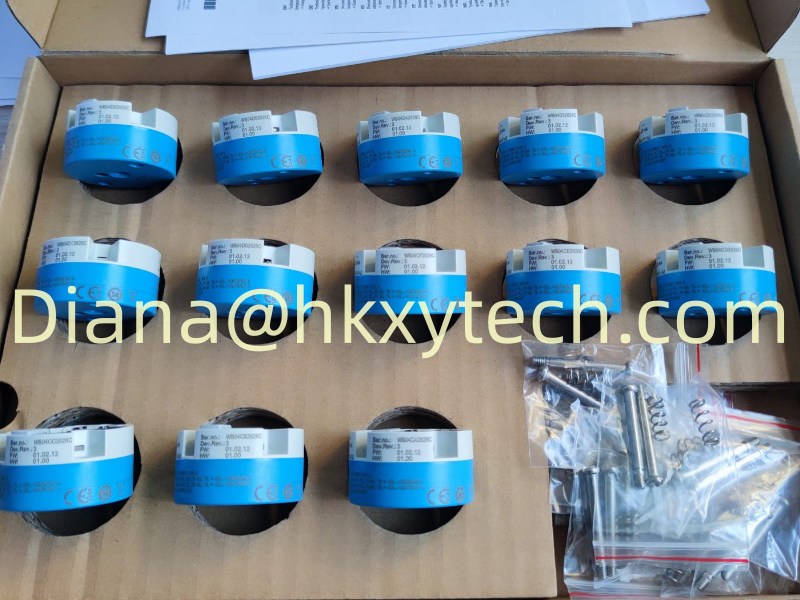
The supplied image shows multiple head-mounted TMT82 units prepared for installation. Because individual letters in the order code define construction, approvals and delivery options, the full label and order documentation for the E+H TMT82-AAA2AB1A1AAA1+Z2 should be checked before assigning hazardous-area, SIL or terminal details to a specific measuring point.
Checkpoint 1: Define the Measurement Purpose
Start by recording what the temperature value controls: indication, quality reporting, energy calculation, equipment protection or a safety function. The role determines the required accuracy, response time, fault behavior and proof-test depth. The E+H TMT82-AAA2AB1A1AAA1+Z2 should be configured from this process requirement, not from a copied parameter file whose original duty is unknown.
Checkpoint 2: Match Both Sensor Inputs Deliberately
Endress+Hauser specifies two universal inputs for RTD, thermocouple, resistance and millivolt signals. Possible two-sensor strategies include backup switching, sensor drift detection, average temperature or differential measurement. These functions are not interchangeable. For the E+H TMT82-AAA2AB1A1AAA1+Z2, document sensor type, wiring method, measuring range, cold-junction treatment where applicable and the exact calculation used to produce the primary value.
Confirm 2-wire, 3-wire or 4-wire RTD wiring and lead-resistance assumptions.
For thermocouples, verify type, polarity, extension cable and reference-junction arrangement.
Keep both configured channels in compatible engineering units.
Define which sensor has priority after a channel fault.
Record every alarm threshold used for sensor-difference monitoring.
Checkpoint 3: Build the 4-20 mA Loop Around Real Conditions
The E+H TMT82-AAA2AB1A1AAA1+Z2 converts the selected input value into one scalable analog output with HART. Calculate the available loop voltage after cable resistance, barriers, isolators, input resistance and test equipment are included. Endress+Hauser lists supply ranges that depend on the mounting and explosion-protection version, so the exact ordered configuration must control the final design.
Choose lower and upper range values that cover credible operation without making normal process variation too small in the 4-20 mA span. Set sensor-break and fault current behavior to match the control-system strategy. When commissioning the E+H TMT82-AAA2AB1A1AAA1+Z2, verify both the digital temperature value and the analog current; agreement between them helps separate sensor configuration errors from loop scaling errors.
Checkpoint 4: Turn HART Data into Maintenance Information
HART 7 communication allows configuration and access to diagnostic information without removing the primary analog signal. Give the E+H TMT82-AAA2AB1A1AAA1+Z2 a controlled tag, descriptor and message that match the instrument index. Save the final configuration file and device revision, and ensure the asset-management system uses a compatible device description.
Endress+Hauser identifies diagnostics according to NAMUR NE 107 and sensor/hardware failure detection as TMT82 capabilities. Maintenance teams should map these conditions to clear plant actions. A diagnostic that is visible only in a handheld tool but absent from operating procedures does not yet improve availability.
Checkpoint 5: Decide How Safety Claims Apply
The TMT82 family is available with SIL 2 capability and SC3 design characteristics, but a family-level capability is not enough to declare a safety loop compliant. Confirm the approvals on the delivered E+H TMT82-AAA2AB1A1AAA1+Z2, use the applicable safety manual, apply required parameter locking and calculate the complete safety function. Sensor, thermowell, transmitter, analog input, logic solver and final element all remain part of the assessment.
If the E+H TMT82-AAA2AB1A1AAA1+Z2 is used in a standard control loop, SIL-related settings still should not be changed casually. Record whether the device is operating in a safety mode, who is authorized to modify it and how write protection is managed.
Checkpoint 6: Commission with Evidence, Not Assumptions
Verify the complete E+H TMT82-AAA2AB1A1AAA1+Z2 order code, serial number and approvals.
Inspect terminals, sensor polarity, shield termination and transmitter mounting.
Simulate each configured sensor input at several points across the working range.
Confirm local HART values, 4-20 mA output and control-system engineering units.
Open and short each sensor channel as permitted, then verify alarms and fallback behavior.
Save as-left parameters, test readings and instrument identification.
For a redundant-sensor strategy, test both directions of transfer rather than disconnecting only one sensor. For difference monitoring, apply controlled offsets and confirm the alarm resets correctly. This proves how the E+H TMT82-AAA2AB1A1AAA1+Z2 behaves when real field faults occur.
Checkpoint 7: Protect the Lifecycle Baseline
Future troubleshooting depends on knowing what changed. Keep the sensor certificates, transmitter configuration, HART revision, loop drawing, range, damping, fault current and diagnostic mapping together. When replacing the E+H TMT82-AAA2AB1A1AAA1+Z2, compare the complete suffix and approvals instead of ordering only a generic TMT82.
The E+H TMT82-AAA2AB1A1AAA1+Z2 can support reliable temperature measurement when every part of the signal chain is explicit: sensor selection, two-channel logic, loop voltage, HART asset data, safety status and proof-test evidence. That disciplined approach turns the E+H TMT82-AAA2AB1A1AAA1+Z2 into a traceable measurement asset rather than an isolated electronic module.