
Professional FLK 435-II Three-Phase Power Quality and Energy Analyzer for Advanced Electrical Diagnostics
 August
10, 2026
August
10, 2026
Applying the FLK 435-II for Comprehensive Three-Phase Power Quality Surveys: Measurement Planning, Energy Analysis and Practical Reporting
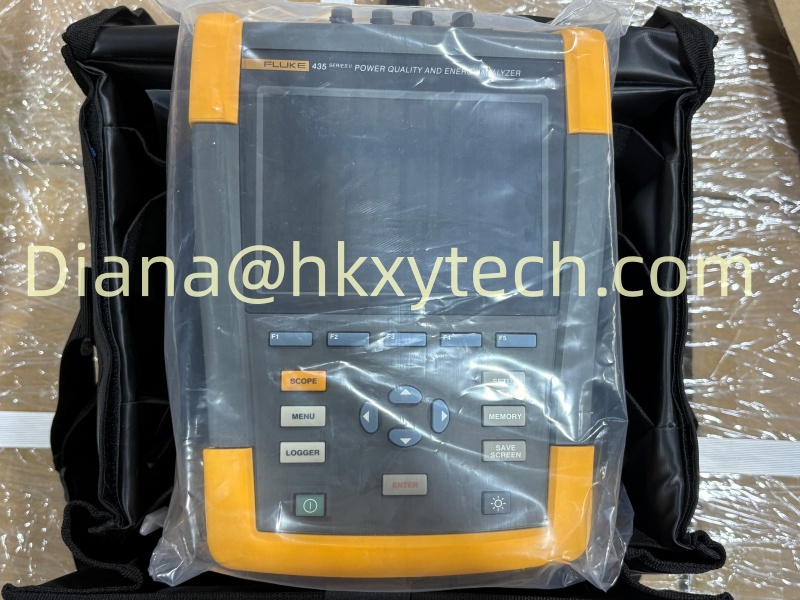
The FLK 435-II is a portable three-phase power quality and energy analyzer designed for technicians who need to move from a general electrical complaint to measured evidence. It can support investigations involving voltage behavior, current loading, harmonics, unbalance, transients, energy use and motor-starting events. Used with a disciplined test plan, the FLK 435-II helps maintenance teams identify whether a problem begins at the supply, distribution system or connected load.
Successful field work starts before the instrument is connected. Engineers should define the complaint, operating window, expected load changes and required recording duration. A short spot measurement may miss intermittent conditions, while a longer FLK 435-II logging session can capture production cycles, shift changes and switching events. The measurement objective determines which parameters deserve the most attention.
Measurement Capabilities at a Glance
| Area | Practical Use |
| Three-phase and neutral measurement | Assess voltage and current across the complete electrical system |
| Power quality health | Review key conditions quickly before deeper analysis |
| Energy loss calculation | Relate poor power quality and inefficient loading to operating cost |
| Motor starting | Observe how startup events affect system voltage and current |
| Safety category | CAT III 1000 V and CAT IV 600 V according to the official product reference |
| Voltage reference | 1 V to 1000 V phase-to-neutral measurement range for the 435-II specification |
Build a Safe and Repeatable Survey
Before connecting the FLK 435-II, a qualified person should review the system voltage, available fault energy, access restrictions and personal protective equipment required by the site procedure. Inspect voltage leads, current probes and connectors for damage. The FLK 435-II must be used only within the ratings of the instrument and accessories, with the correct connection configuration selected for the electrical system.
Connection verification is essential. Confirm phase order, clamp orientation and nominal voltage before recording. Incorrect current-probe direction can reverse power values and produce misleading energy calculations. After the FLK 435-II is connected, compare the displayed voltage and current with expected plant values and investigate any obvious inconsistency before starting a long logging period.
Diagnose the System in Layers
A useful workflow begins with steady-state voltage and current. The FLK 435-II can then be used to examine unbalance, frequency, power factor and harmonic content. If production equipment trips during switching events, focus on dips, swells, interruptions and transient behavior. If cables or transformers run hot, compare phase currents, loading, harmonic contribution and neutral current rather than assuming that total current alone explains the condition.
Motor-starting tests should record conditions before, during and after the start. The FLK 435-II can help show whether voltage depression coincides with inrush current and whether neighboring loads are affected. Repeating the measurement under comparable process conditions provides stronger evidence than a single event and gives the engineering team a reliable basis for corrective action.
Turn Measurements into Energy Decisions
The FLK 435-II is useful not only for troubleshooting but also for energy studies. Record real power, reactive power, apparent power, power factor and load profile over a representative period. The FLK 435-II energy-loss tools can help organize the financial impact of poor power quality, but assumptions such as operating hours and energy price should be documented separately so the final business case remains auditable.
When comparing operating modes, use the same measurement point and similar production output. A lower kilowatt reading is not meaningful if throughput has also fallen. The FLK 435-II data should be paired with production information so energy intensity, not only instantaneous demand, can be evaluated.
Reporting and Lifecycle Practice
A clear report should state the measurement location, connection diagram, date, load condition, recording interval and instrument configuration. Screenshots and trend data from the FLK 435-II should support a concise explanation of what happened, when it happened and how severe it was. Separate verified observations from engineering interpretation and list any follow-up test required.
Keep the FLK 435-II clean, protect connectors during transport and inspect leads before every survey. Maintain calibration records according to the quality system and back up important measurement files. The official manufacturer page currently classifies the model as discontinued or reclassified, so availability, service support and replacement planning should be confirmed before purchase.
For organizations maintaining an installed unit, the FLK 435-II remains a capable platform for structured power quality work. Safe connections, representative logging and careful interpretation allow the FLK 435-II to turn complex electrical behavior into practical maintenance priorities and defensible energy decisions.