
High-Efficiency ABB ACS880-01-124A-5 Wall-Mounted AC Drive for Demanding Process and Automation Applications
 August
07, 2026
August
07, 2026
Building Efficient 500 V Drive Systems Around the ABB ACS880-01-124A-5: Practical Guidance for Process Control, Integration and Maintenance
The ABB ACS880-01-124A-5 combines a compact wall-mounted format with an industrial drive platform designed for broad process and machine applications. ABB lists the unit at 75 kW, 124 A and 500 V for IEC duties, with a UL reference of 100 hp, 124 A and 480 V. These ratings position the ABB ACS880-01-124A-5 for projects that need controlled motor performance in a 480 to 500 V class system.
Plant teams often evaluate the ABB ACS880-01-124A-5 for pumps, fans, extruders, conveyors, mixers and auxiliary process equipment. Each application places different demands on acceleration, starting torque, speed stability and overload capability. The strongest selection process therefore combines the motor data with a realistic load profile and confirms that the ABB ACS880-01-124A-5 is suitable for the required duty point.
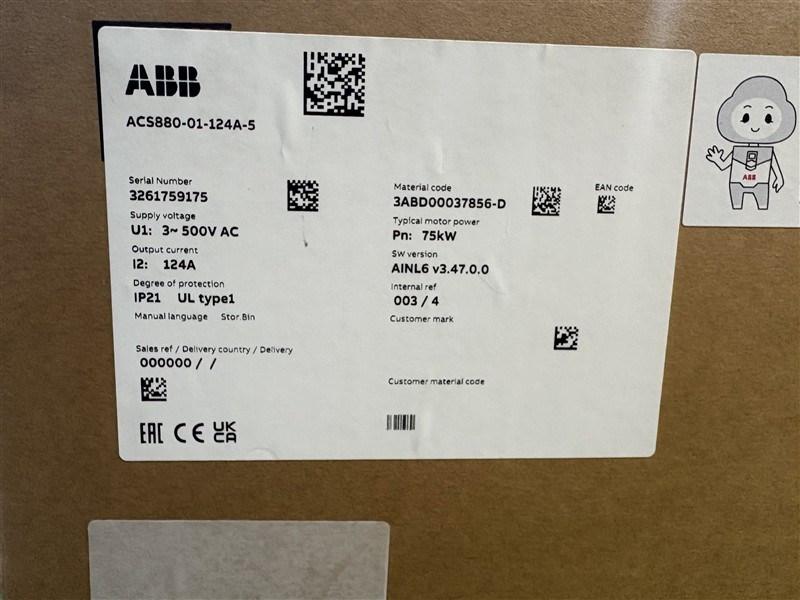
Published Model Snapshot
| Parameter | ABB ACS880-01-124A-5 Reference |
| Product type | LV AC industrial wall-mounted single drive |
| IEC nominal power | 75 kW |
| IEC voltage and current | 500 V, 124 A |
| UL power reference | 100 hp |
| UL voltage and current reference | 480 V, 124 A |
| Configuration check | Confirm the complete ordering code, options and local approvals |
Match the Drive to the Process Objective
For a new project, begin by describing what the process must accomplish. A pump may require stable pressure, a fan may follow airflow demand, and a conveyor may need repeatable acceleration without product movement. The ABB ACS880-01-124A-5 should be sized using measured or calculated torque and current throughout the operating cycle. Service factor, starts per hour, ambient temperature and installation altitude should also be reviewed with the official ABB documentation.
Energy performance depends on the load. Variable-torque applications can often reduce input power when speed is lowered, while constant-torque machinery requires a different assessment. The ABB ACS880-01-124A-5 gives engineers a platform for matching motor speed to production demand, but realistic savings should be calculated from the actual duty profile rather than a single full-load value.
Electrical and Mechanical Integration
A dependable ABB ACS880-01-124A-5 installation begins with verified supply characteristics and properly selected upstream protection. Cable type, conductor size, motor-cable length, grounding and electromagnetic compatibility practices must follow the project standard and the relevant ABB manual. The enclosure or electrical room should provide adequate cooling so that heat from the ABB ACS880-01-124A-5 and neighboring equipment does not accumulate.
Control wiring should be organized by function. Safety-related circuits, process interlocks, normal run commands and speed references should be documented separately. If the ABB ACS880-01-124A-5 communicates with a PLC or supervisory system, engineers should define the command source, status words, fault handling and fallback behavior before startup. This prevents ambiguous control ownership during commissioning.
A Commissioning Workflow That Supports Future Service
After installation inspection, enter the motor nameplate data into the ABB ACS880-01-124A-5 and perform the required identification procedure under safe conditions. Check rotation with the process uncoupled when practical, then test acceleration, deceleration and stopping. Compare current at several operating points with the expected mechanical load, and investigate any unusual vibration, noise or heating before releasing the machine.
Functional testing should include local and remote commands, process feedback, alarm outputs and interlocks. The ABB ACS880-01-124A-5 response to loss of reference, communications interruption and power restoration should match the approved operating philosophy. Once accepted, export or record the complete ABB ACS880-01-124A-5 parameter set and note the installed option codes.
Lifecycle Practices for Reliable Operation
Drive reliability improves when inspection is scheduled rather than reactive. Keep ventilation routes clear, check for contamination, examine terminal condition and review the event history. Comparing ABB ACS880-01-124A-5 operating data over time can reveal changes in the driven process, such as a blocked filter, bearing wear or increasing mechanical resistance.
Spare planning should include more than a drive on a shelf. Store the validated parameter backup, control drawings, firmware information where applicable, accessory list and commissioning report with the ABB ACS880-01-124A-5 asset record. If a spare is required, confirm storage conditions and periodically review whether the specified configuration still matches the operating plant.
The ABB ACS880-01-124A-5 is most valuable when it is treated as part of an engineered motor system. Correct duty selection, clean wiring, controlled startup and practical documentation allow the ABB ACS880-01-124A-5 to support efficient production and straightforward maintenance. Buyers should verify the complete type code and every required option before ordering so the delivered ABB ACS880-01-124A-5 matches the electrical, mechanical and regulatory requirements of the project.