
ABB TSP311B5K1N3Z9S1D6P2S1L1H7-290MM SensyTemp Pt100 HART Temperature Sensor for Heavy-Duty Process Measurement
 September
30, 2026
September
30, 2026
Selection and installation guide for ABB TSP311B5K1N3Z9S1D6P2S1L1H7-290MM in industrial temperature loops
ABB TSP311B5K1N3Z9S1D6P2S1L1H7-290MM is a configured ABB SensyTemp TSP311 temperature sensor reference for demanding industrial measurement points. The complete string combines mechanical, sensing, head and transmitter choices, so every code segment and the stated 290 mm dimension should remain unchanged from inquiry through receiving inspection.
The TSP311 platform is intended for heavy-duty service without an integral thermowell. It can be used as part of a process temperature loop where installation geometry, material compatibility, hazardous-area requirements, Pt100 wiring and HART integration all need to be reviewed together.
Product focus
- ABB SensyTemp TSP311 heavy-duty temperature sensor configuration.
- Single Pt100 sensing element with three-wire connection.
- Six-millimetre measuring insert and specified 290 mm dimension.
- Stainless-steel connection head in the documented S1 execution.
- Ex-version TTH200 HART transmitter with programmable 4-20 mA output.
For replacement work, matching only the TSP311 family name is not enough. ABB TSP311B5K1N3Z9S1D6P2S1L1H7-290MM should be handled as one controlled purchasing identity because a change in connection, length, head, sensor element or transmitter can affect fit, loop accuracy and area approval.
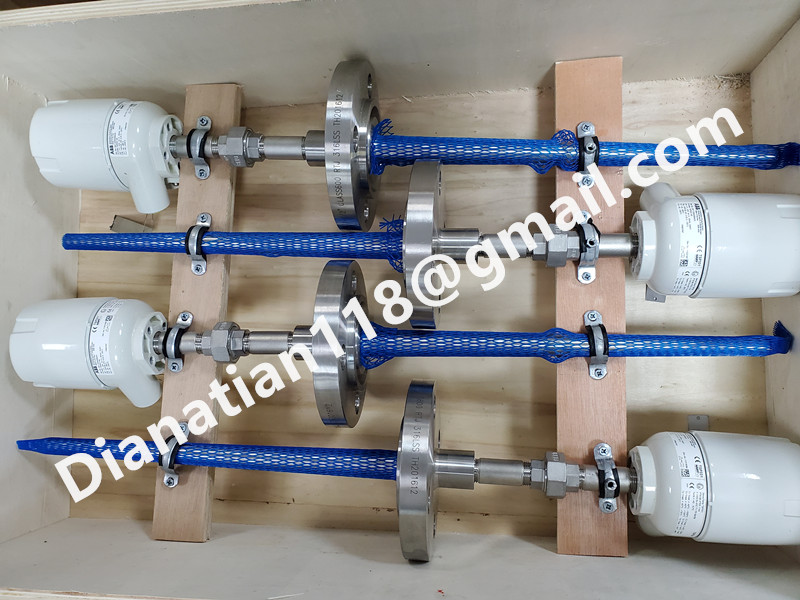
ABB SensyTemp product-family reference image. The shared library picture supports brand and product-category recognition; the nameplate and ABB order record must confirm the exact mechanical execution of ABB TSP311B5K1N3Z9S1D6P2S1L1H7-290MM.
Key product parameters
The table below keeps the page focused on the parameters most useful to a buyer. Published meanings are separated from the order-specific segments that still require the current ABB configuration record.
| Complete order reference | TSP311B5K1N3Z9S1D6P2S1L1H7-290MM |
|---|---|
| Product family | ABB SensyTemp TSP311 heavy-duty temperature sensor without thermowell |
| Sensor element | S1: thin-film Pt100, IEC 60751 Class A; published range -30 to +300 degrees C |
| Measuring insert | D6: 6 mm diameter |
| Sensor and wiring | P2: 1 x Pt100, 3-wire |
| Connection head | S1: AGS stainless-steel head with screwed cover |
| Head transmitter | H7: TTH200-HART Ex version, programmable 4-20 mA output |
| Specified dimension | 290 mm; confirm the ABB drawing reference points before ordering |
| Order-specific segments | B5 / K1 / N3 / Z9 / L1: retain exactly and confirm against the current ABB configuration record |
What the TSP311 platform means for the application
ABB describes TSP311 as a temperature sensor without thermowell for heavy-duty applications. This makes the installed arrangement especially important. The buyer should confirm whether the existing process already provides a suitable thermowell or whether the probe is installed by another approved method.
For ABB TSP311B5K1N3Z9S1D6P2S1L1H7-290MM, document the process medium, normal and maximum temperature, operating pressure, flow velocity, vibration level and corrosion conditions. The selected assembly must be compatible with the actual process and with the mechanical protection already present at the measurement point.
Do not treat the 290 mm value as a free-standing length
The suffix 290MM identifies an important project dimension, but the purchasing record should also state its reference points. Depending on the approved drawing, a length may refer to insertion, probe, extension or another defined dimension. A clear dimensioned sketch is the safest way to compare the old and replacement assemblies.
- Measure the removed sensor from the same reference faces used in the ABB drawing.
- Record process connection, thermowell engagement and available insertion depth.
- Check clearance for the head, cover removal and transmitter service.
- Confirm that the sensing tip reaches the intended active process zone.
Before accepting ABB TSP311B5K1N3Z9S1D6P2S1L1H7-290MM, ask the supplier to repeat 290 mm in the quotation and acknowledge the measurement reference. This avoids a common replacement problem: the correct sensor technology arriving with the wrong installed reach.
Pt100 element and three-wire loop review
The documented S1 sensor selection is a thin-film Pt100 to IEC 60751 Class A, while P2 identifies one Pt100 element in a three-wire arrangement. Three-wire compensation helps reduce lead-resistance error when the cable conductors and termination are correctly matched.
The published S1 range is -30 to +300 degrees C. This sensor-element range is not automatically the final allowable process or ambient range of the whole ABB TSP311B5K1N3Z9S1D6P2S1L1H7-290MM assembly. The connection head, transmitter, approvals, installation method and thermal influence at the mounting point can impose additional limits.
Loop details to confirm
- Pt100 three-wire terminal assignment and conductor identification.
- Cable type, shield treatment and route away from interference sources.
- Transmitter input configuration and expected measurement range.
- Required accuracy, response time and calibration evidence.
- Open-circuit and short-circuit diagnostic behavior in the control system.
When ABB TSP311B5K1N3Z9S1D6P2S1L1H7-290MM replaces an installed sensor, compare the original transmitter range and control-system scaling before commissioning. A mechanically correct sensor can still produce an incorrect process value if the 4-20 mA range or engineering units differ.
TTH200 HART transmitter integration
The H7 segment identifies the Ex version of ABB TTH200-HART, programmable with a 4-20 mA output. HART communication can support configuration and diagnostics over the analog loop, but the available functions depend on the device revision, host system and approved maintenance tools.
For ABB TSP311B5K1N3Z9S1D6P2S1L1H7-290MM, request the programmed lower and upper range values, damping, sensor failure direction, units and tag data. If a replacement transmitter is supplied at factory defaults, the loop may not match the control-system scaling even though the Pt100 input is correct.
Control-system handover
- Save the final HART configuration and device identification.
- Verify loop power, polarity and available voltage at operating current.
- Check analog input scaling against the configured transmitter range.
- Record alarms, sensor-failure current and any loop test results.
Hazardous-area and approval hold points
The supplied code includes approval and Ex-related configuration segments, including an Ex-version head transmitter. The exact permitted area, gas or dust group, equipment protection level, temperature class and ambient limits must come from the delivered nameplate, certificates and ABB order documentation.
Do not approve ABB TSP311B5K1N3Z9S1D6P2S1L1H7-290MM for a classified location from a shortened sales description alone. Check the complete assembly marking, cable entry, glands, grounding, enclosure closure and any barrier or loop requirements against the site hazardous-area dossier.
- Match certificate numbers and nameplate marking to the project zone.
- Confirm the cable gland and unused-entry sealing method.
- Review ambient temperature and process heat transfer at the head.
- Keep the transmitter, head and sensor combination within the approved configuration.
Why the complete order code matters
Several portions of ABB TSP311B5K1N3Z9S1D6P2S1L1H7-290MM describe order-specific mechanical and connection choices. The characters B5, K1, N3, Z9 and L1 should remain visible on the inquiry even when a seller uses a shorter commercial description. They must be decoded from the applicable ABB ordering record for the exact product revision.
This approach protects the buyer from silent substitutions. Two TSP311 assemblies may share the same Pt100 and transmitter technology while differing in process interface, extension geometry, material, cable entry or approval scope. Ask every bidder to return the full offered code and list any deviation.
Replacement and retrofit planning
If ABB TSP311B5K1N3Z9S1D6P2S1L1H7-290MM is intended for an operating plant, collect evidence before removing the old assembly. Photograph the nameplate, process connection, head orientation, cable gland, wiring and available service clearance. Record the current HART settings and control-system tag.
- Compare the complete order code character by character.
- Confirm the 290 mm dimension with a drawing rather than a visual estimate.
- Check the six-millimetre insert against the existing thermowell bore.
- Verify head material, cover access and cable-entry compatibility.
- Preserve loop configuration and calibration records for recommissioning.
An alternative should be treated as an engineered substitution. The supplier should provide a written difference list covering mechanical fit, sensor performance, transmitter, certificates and required installation changes.
Receiving inspection
On delivery, compare ABB TSP311B5K1N3Z9S1D6P2S1L1H7-290MM on the purchase order, packing label and product nameplate. Inspect the probe, connection head, cover threads, cable entry and terminals for transport damage. Do not use the carton label alone as proof of the final configuration.
Documents worth retaining
- ABB order acknowledgement or configuration printout.
- Applicable declarations and hazardous-area certificates.
- Transmitter configuration sheet and HART device details.
- Calibration or inspection certificate required by the project.
- Dimensioned drawing showing the accepted 290 mm reference.
A complete receiving file makes future sourcing easier and gives maintenance teams a dependable baseline when ABB TSP311B5K1N3Z9S1D6P2S1L1H7-290MM is inspected, calibrated or replaced.
Installation and commissioning checks
Installation should follow ABB documentation and the plant procedure. Protect the measuring insert from bending, avoid forcing mismatched threads, and make sure the connection head remains accessible. Confirm that environmental sealing is restored after wiring.
- Verify isolation and process conditions before mechanical work.
- Check insertion depth and head orientation before final tightening.
- Terminate the Pt100 and loop wiring using the approved diagram.
- Confirm transmitter range, units, damping and failure direction.
- Perform a controlled loop test from sensor input to the displayed process value.
After commissioning ABB TSP311B5K1N3Z9S1D6P2S1L1H7-290MM, record the as-left configuration, measured value, analog output and control-system reading. Any unexplained offset should be investigated through wiring, transmitter setup, insertion and reference-temperature checks rather than immediately replacing the sensing element.
Questions to include in the RFQ
Is the full ABB code acknowledged without abbreviation?
The quotation should repeat ABB TSP311B5K1N3Z9S1D6P2S1L1H7-290MM and identify any proposed deviation. Generic wording such as TSP311 Pt100 sensor is not sufficient for technical approval.
How is the 290 mm dimension defined?
Request a dimensional drawing or written reference-point definition. This is essential for replacement fit and correct sensing-tip location.
What is included with the programmed transmitter?
Ask for the TTH200 HART range, units, damping, failure current, tag and configuration evidence. Also confirm whether calibration and Ex documentation are included.
Request a quotation from HKXY Tech
Use ABB TSP311B5K1N3Z9S1D6P2S1L1H7-290MM as the controlled inquiry reference. Send quantity, destination, required delivery date, process data, old nameplate photographs, current HART range and the project certificate requirements.
A technically complete offer for ABB TSP311B5K1N3Z9S1D6P2S1L1H7-290MM should identify the exact configuration, confirm the 290 mm dimension, state condition and lead time, and list the supplied documentation. Keeping the full model visible throughout the purchasing process supports accurate sourcing and faster technical comparison.
Manufacturer reference: ABB SensyTemp TSP311, TSP321 and TSP331 temperature sensor data sheet. Final selection and approval must follow the confirmed ABB order record, nameplate and project requirements.