Designing a Resilient 24 VDC Control Network with the Phoenix Contact QUINT4-PS/3AC/224 DC/40 for High-Current Loads, Selective Protection and Predictive Maintenance
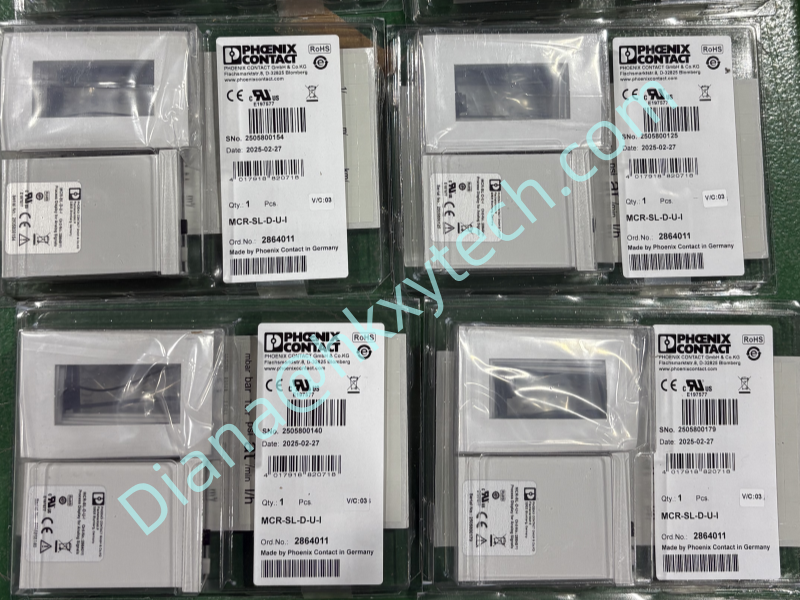
The Phoenix Contact QUINT4-PS/3AC/224 DC/40 is identified for a three-phase QUINT POWER application with a 24 VDC, 40 A output class. Fourth-generation QUINT POWER supplies are intended for high system availability and support configurable output characteristics, SFB selective fuse breaking technology, NFC configuration and preventive function monitoring. The supplied ordering reference should be compared character by character with the physical nameplate and official configuration record before procurement or replacement.
Start with a realistic control-power budget
A 40 A supply should not be selected only by adding the nominal current printed on connected devices. Build a load schedule that distinguishes steady consumption, startup current, switched inductive loads and short-duration peaks. Include PLC and remote I/O racks, network equipment, valve manifolds, relays, contactors, operator terminals, instrumentation and future spare capacity. Record which loads must remain powered during a machine stop or process upset.
The official QUINT4-PS/3AC/24DC/40 family data describes 24 VDC nominal output, 40 A rated current and additional boost behavior for demanding startup conditions. SFB technology can provide a brief high current intended to trip suitable downstream protective devices selectively. The final protection design must still confirm cable capacity, branch breaker characteristics, fault-loop impedance and coordination with the power supply.
Building a realistic 24 VDC load budget
Begin with the continuous current required by every connected load, then apply the project derating and reserve policy. Check dynamic demand separately, including motor brakes, solenoids, capacitive loads and simultaneous startup events that may briefly draw more current than the normal operating total.
Coordinate branch protection so that one failed circuit does not collapse the complete 24 VDC bus. Reserve capacity for approved future additions, but do not use future-growth allowance to conceal an overload that already exists in the commissioned system.
Three-phase input and panel integration
Confirm the incoming network voltage, frequency, protective device, conductor size and disconnection method. The official family documentation covers three-phase industrial input arrangements and includes recommendations for upstream protection. Match the Phoenix Contact QUINT4-PS/3AC/224 DC/40 to the actual site supply and do not infer wiring from another QUINT model with a similar housing.
Mount the supply on the specified DIN rail with the required orientation and clearances. Keep ventilation paths open, particularly in enclosures containing drives, transformers or braking resistors. Calculate cabinet temperature at full production load rather than using room temperature. Observe any output-current derating required at elevated temperature or high altitude.
| Parameter | Specification |
|---|---|
| Model | QUINT4-PS/3AC/224 DC/40 |
| Official product family | QUINT4-PS/3AC/24DC/40, item number 2904623 |
| AC input | 3 × 400–500 V AC, 50–60 Hz |
| Nominal output | 24 V DC, 40 A |
| Output adjustment | 24–29.5 V DC |
| Nominal output power | 960 W |
| Boost capability | 45 A static boost; 60 A dynamic boost for 5 seconds |
| SFB pulse | 215 A for 15 ms |
| Dimensions | 120 × 130 × 125 mm |
Configuration, monitoring and service strategy
Where NFC configuration is used, control who can change output characteristics and signaling thresholds. Save an approved parameter record with the panel documentation. Preventive function monitoring is valuable only when warning outputs are connected, named clearly in the control system and linked to a maintenance response. Test these signals during commissioning instead of assuming the default settings match the project.
If the 24 VDC bus collapses, measure the input and output before replacing the supply. Isolate downstream branches methodically and look for overload, short circuit, reversed polarity, damaged suppression components or excessive inrush. Record the condition that caused the event. A replacement Phoenix Contact QUINT4-PS/3AC/224 DC/40 will not solve a persistent downstream fault.
A well-engineered Phoenix Contact QUINT4-PS/3AC/224 DC/40 installation combines the supply with a verified load budget, selective branch protection, suitable thermal layout and useful warning signals. These details convert available output power into a stable, diagnosable and maintainable control network.