
Engineering the ABB ACS880-07-0721A-7 Cabinet-Built Industrial Drive Around a 690 V Motor System, Real Load Demand and Long-Term Plant Availability
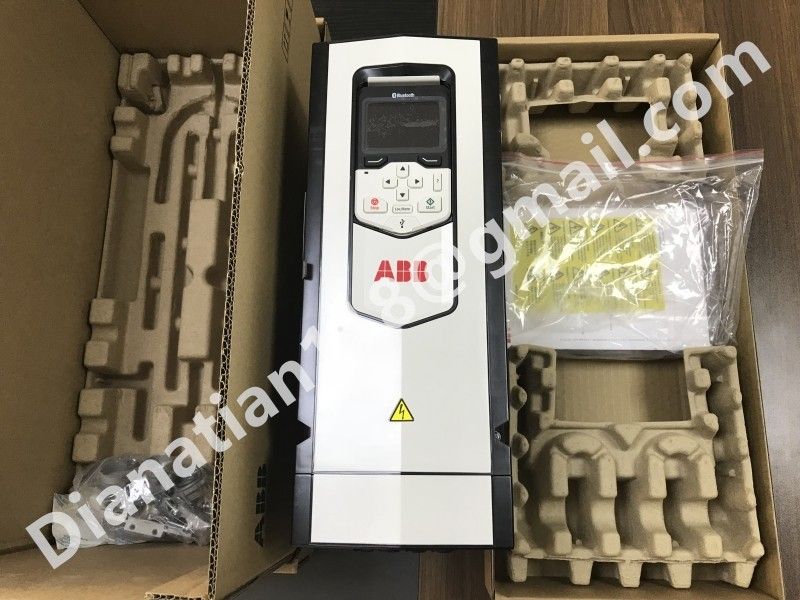
The ABB ACS880-07-0721A-7 is a cabinet-built industrial drive in the ACS880-07 family for high-power variable-speed motor applications. The type code identifies a 690 V class configuration with a 0721A rating designation, but correct selection depends on much more than the model name. Motor data, load duty, ambient conditions, supply characteristics, cabinet options and control interfaces must form one coordinated design.

A drive should be sized from the operating profile rather than a single current figure
ABB rating tables distinguish no-overload, light-overload and heavy-duty operating points. For the ACS880-07-0721A-7, engineers should map the machine torque curve, continuous demand, peak torque, acceleration time and overload frequency before selecting a duty rating. The motor nameplate current remains important, but it does not describe process transients, low-speed cooling or repeated starts.
This distinction is especially relevant on conveyors, crushers, mixers, compressors, pumps, fans, winders and other equipment where the mechanical load changes during a production cycle. A drive that appears adequate at steady state may be unsuitable if the process requires frequent high-torque acceleration. The ABB ACS880-07-0721A-7 should therefore be checked with the manufacturer selection data and the actual load study.
The electrical system around the cabinet defines many of the final options
The ABB ACS880-07-0721A-7 cabinet may be ordered with project-specific accessories. A replacement inquiry should include the complete option code string, serial number and original cabinet drawings. Base model compatibility does not guarantee that disconnects, filters, contactors, braking hardware, communication adapters, I/O extensions or safety features are the same.
Cable selection should consider current capacity, installation method, ambient temperature, grouping and local regulations. Power and control wiring need suitable separation, shielding and bonding. Motor insulation, bearing protection and common-mode effects deserve attention on long cable runs or older motors. The earthing design should provide a dependable high-frequency path as well as protective continuity.
Commissioning connects the factory-built cabinet to the real process
| Commissioning area | Evidence to retain |
|---|---|
| Motor and load | Nameplate data, direction, current, speed range and loaded operating points |
| Control | Local and remote commands, references, I/O, fieldbus and interlocks |
| Protection | Limits, trip responses, emergency functions and cooling supervision |
| Configuration | Final parameter backup, firmware data and approved change record |
Before energization, qualified personnel should inspect terminations, busbar joints, auxiliary supplies, cooling paths and mechanical barriers under the approved safety procedure. Insulation testing must follow ABB instructions so that semiconductor equipment is not exposed to an unsuitable test. Initial power-up should begin with controlled commands and verified motor data.
The ACS880 primary control platform supports precise motor control, but parameter quality determines how that capability reaches the process. Limits, ramps, torque control, I/O functions and fieldbus mapping should reflect the machine risk assessment and operating sequence. Every deliberate change made during testing should appear in the final ABB ACS880-07-0721A-7 parameter backup.
Maintenance decisions are stronger when trend data and physical inspection are combined
Cooling condition is central to drive reliability. Plant rounds should look for blocked filters, unusual fan sound, cabinet contamination, excessive temperature and loose or discolored connections. Event logs can then be compared with motor current, process demand, supply disturbances and ambient conditions. This avoids treating every trip as an internal ACS880-07-0721A-7 fault.
The lifecycle file should connect the ABB ACS880-07-0721A-7 type and serial data with option codes, drawings, manuals, spares, firmware and the latest verified backup. That record supports faster recovery after a failure and more accurate modernization planning. A well-engineered ABB ACS880-07-0721A-7 installation is the result of correct duty selection, disciplined commissioning and routine attention to the cabinet environment.