Relating ABB TF42-38 to the motor current, trip history and reset requirements of an existing protected starter
Investigate the reason for replacement
An overload trip and a defective overload relay are different maintenance findings. Before ordering ABB TF42-38, establish whether the job addresses physical damage, a planned replacement or repeated operation under load. The answer affects what information the responsible technician needs. Replacing a relay without understanding a recurring trip may leave the original motor or load problem unresolved. Keep the observed symptoms in the ABB TF42-38 service record.
Bring the motor data to the discussion
- The motor nameplate, operating connection and starter arrangement provide the basis for setting selection.
- Compare those details with the permitted adjustment range for ABB TF42-38; the range must support the approved setting.
- Do not interpret the model suffix as an instruction to set the relay to that value.
- The final setting for ABB TF42-38 belongs to the application design and the relevant manufacturer instructions.
A protection chain has several components
ABB TF42-38 provides thermal overload protection within a coordinated motor circuit. It does not remove the need to assess upstream short-circuit protection and the contactor combination. Ask for the applicable coordination information when a starter is changed. A replacement of ABB TF42-38 in an otherwise unchanged assembly still benefits from checking that the installed components match the recorded design.
Reset behavior affects the operator
Review the intended reset arrangement and the way the machine handles a trip. The relay, contactor command circuit and machine logic work together to determine what happens after the fault condition is addressed. For ABB TF42-38, document the required control behavior before installation. An accessory or reset arrangement should not be assumed included just because it appeared on the removed starter.
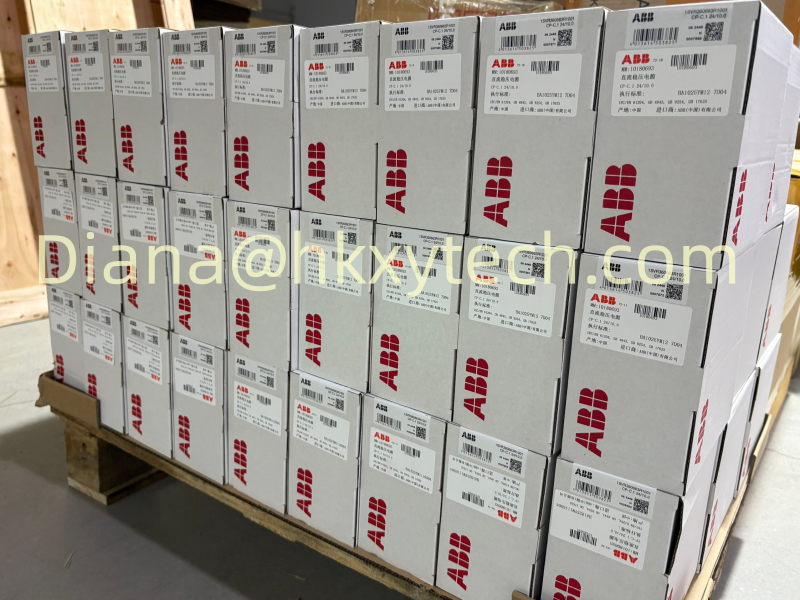
Shared reference image for ABB TF42-38. The pictured equipment may differ from the exact ordered assembly; use the full part number and configuration record for identification.
Overload relay selection record
| Item | Identification or selection information |
|---|---|
| ABB order number | 1SAZ721201R1055 |
| Product family | TF42 thermal overload relay |
| Protection principle | Electromechanical thermal overload protection |
| Current setting | Verify the exact adjustment range and required setting against the datasheet and motor design |
| Coordination | Confirm contactor combination and upstream short-circuit protection |
Compare neighboring TF42 ranges carefully
A nearby TF42 code may share the same general form while providing a different adjustment range. Keep ABB TF42-38 in the exact purchasing description and ask the supplier to identify any proposed difference. The required motor setting, mechanical combination and circuit behavior all need to remain suitable. For ABB TF42-38, a substitution review should be recorded explicitly instead of being reduced to a statement that the replacement is from the same series.
Panel inspection during a planned stop
A scheduled replacement offers an opportunity for qualified personnel to inspect the starter connections and look for signs relevant to the failure report. The purchasing team can support this work by supplying the right drawing and component documentation. Include the terminal arrangement and mounting information for ABB TF42-38 in the job pack, so the maintenance team does not need to identify a different revision while the machine is unavailable.
Evidence for repeat orders
Retain the supplied ABB TF42-38 label, approved setting and final starter component list with the machine history. Where a setting changed, record the engineering basis rather than only the new number. This gives a future buyer a reliable repeat-order reference. It also separates the verified installed configuration from generic catalogue information, which may describe a broader range of relay options.
Documentation basis: manufacturer reference for the product or family. Configuration-dependent details must be reconciled with the complete order code and supplied unit.